
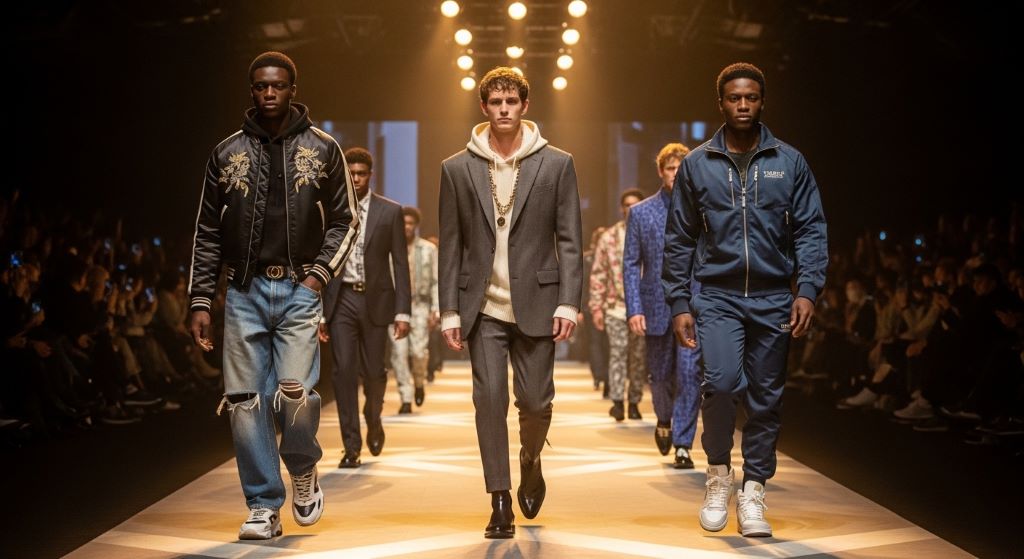
28 Mar Paris Men’s Fashion Week 2026: Luxury vs Streetwear Trend Comparison
Paris Men’s Fashion Week has always been more than just a runway showcase. It is a mirror of culture, identity, and the ever-shifting conversation between tradition and change. In 2026, that conversation reached a fascinating turning point. The Spring/Summer 2026 edition, held from June 24 to June 29, 2025, drew nearly 30,000 international visitors and generated an estimated economic impact of €1.2 billion. However, the more interesting story was not the numbers. It was the tension — and the surprising harmony — between high luxury and streetwear that defined the season.
This article breaks down the key trends from both worlds, compares how designers approached them, and explores what it all means for men’s fashion going forward.
The State of Menswear in 2026
Before diving into the comparison, it helps to understand where menswear stood heading into 2026. The global luxury industry had been experiencing a slowdown. Designers responded with more restrained collections, shifting focus toward refined construction, versatile garments, and utility over theatrics and slogans.
At the same time, streetwear was also changing. Industry experts noted a clear shift away from the years-long dominance of logos, tracksuits, and sneakers, with interest moving toward more refined, quality-focused, and individualistic styles. Therefore, both camps were evolving. Neither was standing still.
Luxury Fashion: Quiet Confidence Takes the Stage
The Return of Refined Tailoring
Luxury menswear in 2026 leaned heavily into craft and restraint. The message from the major houses was clear: less noise, more depth. Hermès, under longtime menswear director Véronique Nichanian, focused on quiet strength and deep craft. The collection featured open-weave and woven leather techniques to create breathable garments that maintained full refinement.
Additionally, the color story at these high-end shows stayed firmly in neutral territory. Coffee brown, slate grey, taupe, and beige dominated the Hermès palette — each piece a study in restraint and tone-on-tone elegance.
This approach reflected a broader luxury philosophy for the season. Craftsmanship replaced spectacle. Subtlety replaced branding. However, that did not mean the clothes lacked personality.
Dior’s New Era
One of the most anticipated moments of the season was Jonathan Anderson’s debut at Dior. Anderson ushered in a playful yet everyday sense of luxury, reintroducing classic house silhouettes in new ways. The iconic Bar jacket, for example, was presented oversized, while cargo pants featured trailing panels that echoed a 1949 Dior ball gown.
This was a masterclass in balancing heritage with freshness. Anderson did not erase history. Instead, he remixed it. The result felt both familiar and entirely new.
Louis Vuitton’s Quiet Luxury Shift
Louis Vuitton, under Pharrell Williams, moved away from logo-heavy statements toward a quieter sophistication. The collection featured premium renditions of everyday staples — striped polos, boxy work shirts, and chinos — with craftsmanship evident in details like a hoodie constructed from hand-sewn mink panels.
This was a notable shift. For several seasons, Louis Vuitton had leaned into bold streetwear energy. In 2026, however, the focus shifted toward wearability and understated excellence.
Streetwear: Growing Up Without Losing Its Edge
Maturity Over Noise
Streetwear did not disappear from Paris Men’s Fashion Week 2026. It simply grew up. Experts described the new streetwear direction as “cleaner and more mature,” retaining loose-fit silhouettes but with more minimalist and thoughtful execution — think wide pleated trousers paired with classic wool knitwear.
This evolution was visible everywhere, from the runways to the streets outside. Brands were no longer competing to be the loudest. They were competing to be the most considered.
Luxury Meets Streetwear on the Runway
Some of the most compelling moments of the week came when designers deliberately blurred the line between the two worlds. Junya Watanabe centered his Fall/Winter 2026 collection on formalwear with a distinctive twist, including a standout collaboration with Stussy. A model wore a suit jacket bearing the streetwear brand’s wordmark on the back, paired with khaki trousers covered in small Stussy logos.
This kind of pairing — a tailored silhouette with a streetwear DNA — captured the mood of the season perfectly. It was not ironic. It was intentional.
Similarly, Willy Chavarria presented his show in three distinct sections: a streetwear-focused line, an Adidas collaboration inspired by football, and his eponymous label, which captured nostalgic elegance in 1950s-inflected tailoring. The fact that all three lived comfortably within one show said a lot about where fashion is heading.
The Street Style Story
Away from the runway, the streets outside the shows told their own version of this story. The prevailing mood on the streets moved away from stiff formality, opting for a comfort-driven philosophy that reimagined traditional menswear through a modern, urban lens. The classic suit was dismantled and modernized with vibrant colors or transformed into long overcoat-blazer silhouettes that offered the structure of tailoring with the ease of a robe.
Oversized fits continued to appear, but with more structure than in previous seasons. Jackets were roomy without feeling sloppy, and trousers sat comfortably without dragging on the ground.
Key Trend Comparisons: Luxury vs Streetwear
Silhouettes
Luxury fashion in 2026 favored clean, structured cuts. Shoulders were considered. Trousers were precisely tailored. The overall shape was deliberate and controlled.
Streetwear, on the other hand, continued to embrace volume. However, that volume became more intentional. Monochromatic looks relied on oversized, drapey silhouettes and voluminous trench coats to create architectural drama without the need for logos.
The interesting middle ground was the hybrid silhouette — oversized in proportion but precise in construction. This was the look that resonated most across both audiences.
Color Palettes
Luxury houses stayed loyal to neutral and muted tones. Earth tones, greys, and beiges dominated collections from Hermès, Dior, and Louis Vuitton.
Streetwear brought in more energy. Some looks introduced vibrant, bright colors through long overcoat-blazer silhouettes, while others stayed monochromatic but relied on texture and layering for visual interest.
Therefore, color became one of the clearest dividing lines between the two worlds this season.
Branding and Logo Culture
This was perhaps the sharpest contrast. Luxury houses in 2026 largely moved away from visible branding. The focus fell on material quality and construction rather than recognizable logos.
Streetwear, however, still carried its identity through brand references — though in a more refined way. Menswear street style in Paris avoided excessive branding in favor of subtle details, showing a clear maturation in how streetwear consumers express identity.
Collaboration as Currency
One area where both worlds agreed was the value of collaboration. Grace Wales Bonner’s collection celebrated its 10th anniversary by partnering with both Savile Row tailors Anderson & Sheppard and streetwear brand Y-3, pairing sheer bejeweled shirting with flared silhouettes and elevated tailcoats with colorful lapels.
This kind of cross-pollination was everywhere. It suggested that the future of menswear is not about one camp winning. It is about both sides learning from each other.

Where the Two Worlds Meet
Perhaps the most significant development of Paris Men’s Fashion Week 2026 was not in the contrast between luxury and streetwear, but in how often they converged.
Guillermo Andrade’s 424 collection focused on combining discarded luxury materials — fur offcuts and old military blankets — with new construction techniques rooted in his love of workwear and military staples. This approach felt genuinely new. It used luxury materials to tell a streetwear story.
Givenchy blended refined tailoring with subtle streetwear influences, featuring slim-cut suits with contemporary tweaks, embellished denim, and utilitarian accents, all in a muted palette of blacks, whites, and earth tones.
Additionally, the styling across both worlds loosened noticeably, with half-popped collars, softened tailoring, tucked-in ties, and deliberate nonchalance becoming common across runways from Saint Laurent to Valentino.
What This Means for Men’s Style
The luxury versus streetwear debate is slowly becoming irrelevant. In 2026, the most interesting clothes live in the space between those two labels.
The direction of Paris men’s style suggests that menswear is moving toward subtle confidence — less about standing out instantly and more about being noticed over time. Clean silhouettes, thoughtful layering, and restrained accessorizing are not tied to a single season.
For everyday men looking to take cues from the runway, the message is encouraging. You do not have to choose a side. You can build a wardrobe that borrows from both worlds — a tailored jacket over a clean crewneck, wide-leg trousers with leather sneakers, or a structured coat with a streetwear-inflected base layer.
Conclusion
Paris Men’s Fashion Week 2026 offered a clear picture of where menswear is going. Luxury leaned into craft, restraint, and heritage — moving away from noise toward depth. Streetwear matured, retaining its relaxed energy but shedding excess in favor of intentionality. However, the most exciting stories of the season came from the designers who refused to stay in one lane.
The luxury-versus-streetwear conversation is giving way to something more interesting: a menswear landscape where quality, fit, and intention matter more than category labels. Whether it was Dior reimagining its archives, Louis Vuitton embracing quiet sophistication, or Junya Watanabe pairing a suit with Stussy, the theme was consistent. Fashion in 2026 rewards thoughtfulness over volume, craft over clout, and personal style over trend-chasing.
Paris has always been the place where style evolves first. In 2026, it showed us that the future of men’s fashion belongs to those who can hold both worlds in their hands at the same time.
Frequently Asked Questions
What were the biggest luxury fashion trends at Paris Men’s Fashion Week 2026?
The biggest luxury trends included refined tailoring, muted color palettes, heritage-inspired silhouettes, and a strong emphasis on craftsmanship over visible branding. Houses like Dior, Hermès, and Louis Vuitton all moved toward quieter, more thoughtful expressions of luxury.
How did streetwear evolve at Paris Men’s Fashion Week 2026?
Streetwear became more mature and restrained. Oversized silhouettes remained, but with more structure. Branding stepped back in favor of subtle details, and collaborations with tailoring houses became more common.
Which designers best combined luxury and streetwear in 2026?
Junya Watanabe, Grace Wales Bonner, and Willy Chavarria stood out for their ability to blend both worlds convincingly. Each brought tailored construction together with streetwear references in a way that felt fresh and authentic.
Is streetwear still relevant in high fashion after Paris Men’s Fashion Week 2026?
Yes, but in a different form. Streetwear is no longer about logos and loud branding. It has evolved into a philosophy of comfort, ease, and personal expression that now informs even the most high-end collections.
What colors dominated Paris Men’s Fashion Week 2026?
Neutral and earthy tones — including browns, greys, beiges, and blacks — dominated luxury collections. Streetwear-influenced looks introduced brighter accents and bold monochromes, though overall the season favored restraint across both camps.
Related Topics:
What is the Main Difference Between Coach and Coach Outlet?
A Gentleman’s Essential: The Timeless Appeal of Luxury Cufflinks

No Comments