
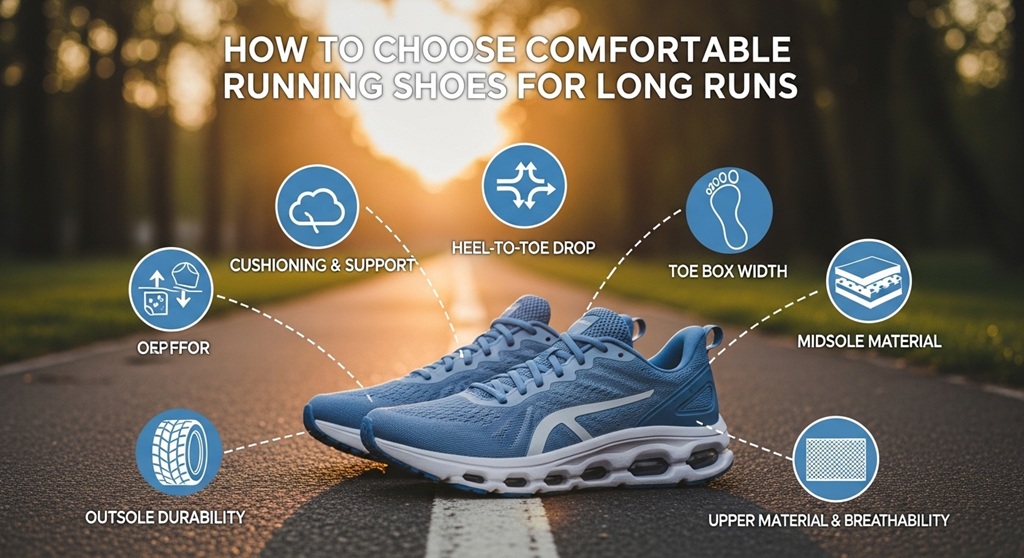
06 Mar How to Choose Comfortable Running Shoes for Long Runs
Running a few miles feels easy—until the wrong shoes turn every step into a struggle. Many runners start their training motivated, but discomfort, foot pain, or fatigue quickly ruins the experience. In most cases, the problem is not the runner. The problem is the shoes.
Comfortable running shoes for long runs are designed to support your feet over extended distances. They focus on cushioning, stability, and shock absorption to reduce stress on joints and muscles. These shoes often feature advanced midsoles, breathable uppers, and structured support systems that keep the foot aligned while running.
Choosing the right pair is not just about brand preference or style. It involves understanding your foot type, running style, and the specific running shoe features that prevent injury and increase endurance. Good cushioned running footwear reduces impact forces, while proper foot support shoes maintain balance and stability throughout the run.
According to research published in the Journal of Sports Science & Medicine, runners using well-cushioned shoes experienced up to 15% lower impact stress on their joints compared with runners wearing minimal cushioning. Over long distances, this difference matters.
This guide explains exactly how to choose comfortable running shoes for long runs. You will learn what features matter, how to evaluate fit, and which mistakes most runners make when buying footwear.
Why Do Long Runs Require Special Running Shoes?
Short Answer: Long runs require specialized running shoes because they reduce repetitive impact, improve energy return, and provide stability for extended mileage.
Running places significant stress on the body. Every stride generates impact forces that travel through the feet, ankles, knees, and hips. For a runner weighing 70 kg, each step can produce forces equal to two to three times body weight.
Now imagine repeating that impact thousands of times during a long run.
Without proper foot support shoes, runners may experience:
- Foot fatigue
- Shin splints
- Knee pain
- Plantar fasciitis
- Achilles tendon strain
This is where modern cushioned running footwear becomes essential. Long-distance running shoes use specialized midsoles and shock-absorbing materials that reduce stress while maintaining efficiency.
A study conducted by the American Council on Exercise found that runners wearing optimized cushioned shoes showed a 12% improvement in endurance performance during long-distance trials.
The right shoes allow runners to maintain consistent stride mechanics and reduce energy loss during long training sessions.
What Running Shoe Features Matter Most for Long Runs?
Short Answer: The most important running shoe features include cushioning, arch support, heel stability, breathable materials, and proper outsole grip.
Many runners focus only on brand names or appearance. However, performance depends on technical design.
Key Running Shoe Features to Evaluate
| Feature | Why It Matters |
|---|---|
| Midsole Cushioning | Absorbs shock and reduces impact on joints |
| Arch Support | Maintains proper foot alignment |
| Heel Stability | Prevents excessive heel movement |
| Breathable Upper | Improves airflow and reduces overheating |
| Durable Outsole | Provides traction and extends shoe lifespan |
Good cushioned running footwear uses foam technologies such as EVA or TPU blends that balance softness and responsiveness.
Meanwhile, foot support shoes with structured heel counters and arch reinforcement help runners maintain efficient stride patterns during long sessions.
How Much Cushioning Do You Need for Long Runs?
Short Answer: Most long-distance runners benefit from moderate to high cushioning to reduce fatigue and absorb repeated impact.
Cushioning plays a critical role in long-distance comfort.
However, more cushioning does not always mean better performance. Excessively soft shoes may reduce stability, while minimal cushioning may increase joint stress.
Types of Cushioning Levels
- Minimal Cushioning: Lightweight, suitable for speed training
- Moderate Cushioning: Balanced comfort and responsiveness
- Maximum Cushioning: Designed for long distances and recovery runs
For runners preparing for half marathons or marathons, moderate to maximum cushioning usually provides the best balance between comfort and performance.
Well-designed cushioned running footwear distributes pressure evenly across the foot, reducing localized stress points.
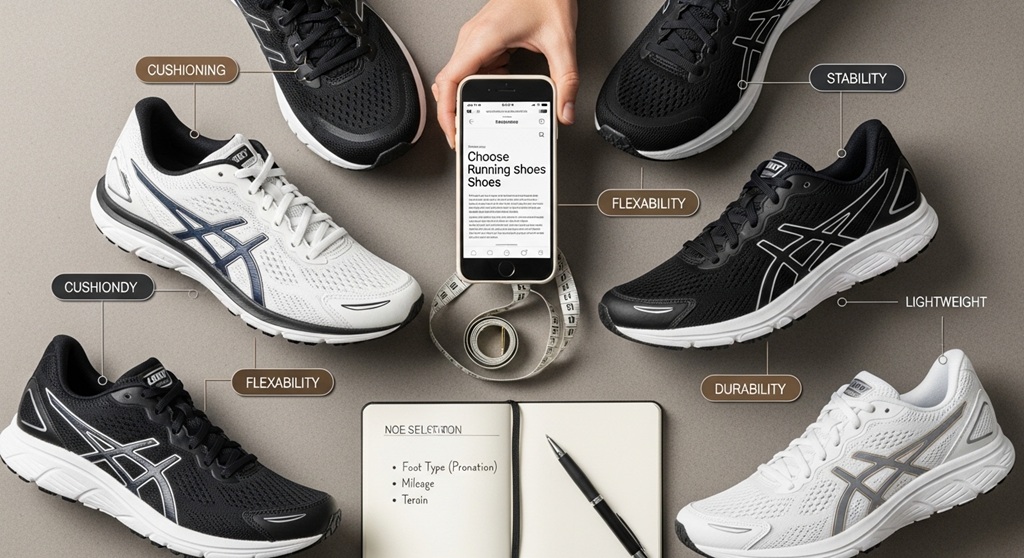
How Does Foot Type Affect Your Choice of Running Shoes?
Short Answer: Your arch type and pronation pattern determine which foot support shoes provide the best comfort and injury prevention.
Every runner has a unique foot structure. Understanding this structure helps you select the right footwear.
Three Common Foot Types
- Neutral Arch: Balanced foot mechanics
- Flat Foot (Overpronation): Foot rolls inward excessively
- High Arch (Supination): Limited inward rolling
Runners with flat feet often require stability shoes with reinforced midsoles. These foot support shoes limit excessive inward motion.
Meanwhile, runners with high arches benefit from flexible cushioned running footwear that improves shock absorption.
Understanding your foot mechanics helps prevent common running injuries.
How Should Running Shoes Fit for Long Runs?
Short Answer: Running shoes should feel snug at the heel, spacious at the toe box, and allow about half an inch of extra room in front of the toes.
Fit is one of the most overlooked factors in running comfort.
During long runs, feet naturally expand due to increased blood flow and heat. Shoes that fit perfectly at rest may become tight during a run.
Key Fit Guidelines
- Leave 0.5 inch space between longest toe and shoe tip
- Heel should not slip while running
- Toe box should allow natural toe movement
- Laces should secure the midfoot without pressure
Well-fitted foot support shoes prevent friction and reduce the risk of blisters or black toenails.
Trying shoes later in the day—when feet are slightly swollen—often provides the most accurate fit.
How Important Is Breathability in Running Shoes?
Short Answer: Breathability prevents heat buildup, reduces moisture, and improves overall comfort during long runs.
Long runs generate heat and sweat. Without proper ventilation, feet may overheat quickly.
Modern running shoe features include engineered mesh uppers that allow airflow while maintaining structural support.
Breathable materials help prevent:
- Excess sweating
- Foot odor
- Blisters
- Skin irritation
Good airflow also keeps the shoe lightweight during wet conditions.
How Long Should Running Shoes Last?
Short Answer: Most running shoes maintain optimal performance for 300 to 500 miles.
Even the best cushioned running footwear gradually loses shock absorption over time.
After hundreds of miles, midsole foam compresses and becomes less effective.
Signs Your Shoes Need Replacement
- Worn outsole patterns
- Reduced cushioning
- New joint or foot discomfort
- Uneven shoe wear
Professional runners track mileage carefully. Recreational runners can estimate wear based on training frequency.
For example:
- Running 20 miles per week → shoes may last 4–6 months
- Running 40 miles per week → shoes may last 2–3 months
What Do Real Case Studies Say About Running Shoe Comfort?
Short Answer: Research and real-world running studies consistently show that proper cushioning and support reduce injury risk.
One large study published in the British Journal of Sports Medicine examined over 900 runners during marathon training.
The results showed:
- Runners using high-cushion shoes had lower injury rates
- Stable foot alignment improved running efficiency
- Runners reported higher comfort scores after long runs
The study also noted that shoes combining cushioning with stability features produced the best results.
This reinforces the importance of selecting well-designed running shoe features rather than relying on aesthetics or trends.
What Common Mistakes Do Runners Make When Buying Running Shoes?
Short Answer: The most common mistakes include buying shoes based on style, choosing the wrong size, and ignoring foot type.
Many runners unknowingly choose shoes that increase injury risk.
Common Buying Mistakes
- Buying shoes that are too small
- Ignoring arch support requirements
- Using old worn-out shoes
- Choosing fashion over functionality
- Switching to minimal shoes too quickly
Focusing on functional running shoe features and proper fit helps runners avoid these mistakes.
Conclusion: How Can the Right Running Shoes Improve Your Long Runs?
Choosing the right running shoes is one of the most important decisions a runner can make. The right pair improves comfort, reduces injury risk, and helps maintain consistent performance during long distances.
Comfortable long-distance running shoes combine several elements: effective cushioning, reliable foot support, breathable materials, and a precise fit. When these factors work together, runners experience less fatigue and more efficient movement.
Investing time in selecting proper cushioned running footwear and well-structured foot support shoes can significantly improve your training experience.
If you are planning longer runs or preparing for endurance events, start by evaluating your current shoes. Check their cushioning, fit, and wear patterns. If they no longer provide proper support, upgrading to modern footwear with advanced running shoe features may be the step that transforms your running routine.
Ready to run longer without discomfort? Start by choosing shoes designed for endurance, support, and long-distance performance.
Frequently Asked Questions
What type of running shoes are best for long-distance running?
The best running shoes for long-distance running provide balanced cushioning, strong arch support, and breathable materials. These features reduce fatigue and protect joints during extended mileage.
Are cushioned running shoes better for long runs?
Yes. Cushioned running footwear absorbs repeated impact forces and reduces stress on the knees and ankles. This helps runners maintain comfort during longer distances.
How do I know if my running shoes have enough support?
Supportive shoes should stabilize the heel, support the arch, and keep the foot aligned during movement. If you feel instability or excessive inward rolling, your shoes may lack sufficient support.
Should running shoes be tight or loose?
Running shoes should fit snugly around the heel and midfoot while allowing space for toe movement. About half an inch of extra room at the toe box is recommended.
Can the wrong running shoes cause injuries?
Yes. Improper footwear can lead to common injuries such as shin splints, plantar fasciitis, and knee pain. Shoes lacking cushioning or support increase impact stress on joints.
How often should runners replace their shoes?
Most running shoes should be replaced after 300–500 miles. Beyond this range, cushioning and structural support begin to degrade.
Read More Also: Visual Kei Fashion Boots and Platform Shoe Styling Guide
Up Next: New help for low-income homes and heating support

No Comments