
03 Sep Why Designer Mules Slip at Heel: Miami, FL
Designer mules usually slip at the heel because their open-back construction lacks a heel counter. Foot shape, sizing, sweat, smooth footbeds, and heel height can increase movement. Research also found that 63% to 72% of people wear incorrectly fitted footwear. Meanwhile, online footwear returns remain heavily influenced by sizing problems. Even premium shoes need individual fit checks, so gucci shoes true to size does not guarantee a secure mule fit.
Key Takeaways
- Heel slip often comes from forward foot movement, not simply shoe size.
- A loose vamp can allow your heel to lift repeatedly while walking.
- Miami heat and humidity can increase moisture and friction inside mules.
- Heel height can shift body weight forward and worsen rear movement.
- Thin insoles, smooth leather, and poor width matching can increase slipping.
- Small fit adjustments usually work better than immediately choosing a smaller size.
What Heel Slip Actually Means in Designer Mules
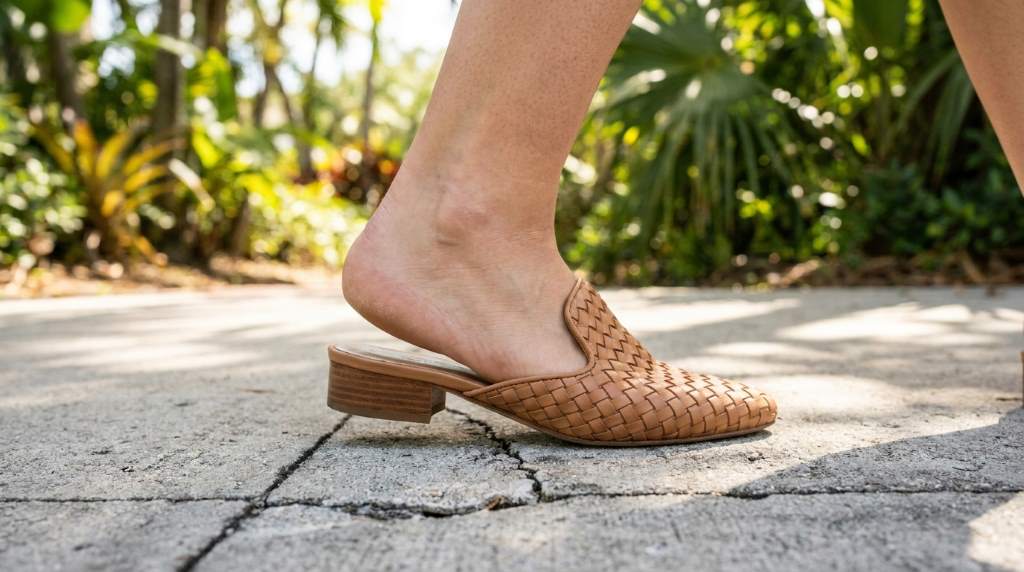
Heel slip describes repeated upward movement between your heel and the mule’s rear edge. Some movement remains normal because mules intentionally leave the heel uncovered. However, excessive lifting signals poor interaction between your foot and the shoe.
Unlike closed-back footwear, designer mules cannot use a traditional heel counter. Instead, the upper must hold your foot securely across the forefoot and instep. Therefore, even a luxurious mule can feel unstable when those areas fit incorrectly.
The problem becomes more noticeable when your foot slides forward during each step. Your heel then rises higher because the shoe remains behind your natural heel position. That cycle creates flapping, instability, rubbing, and occasional shoe loss.
Miami walking conditions can make the problem more obvious during warm months. Heat can increase perspiration, while humidity can change how leather and skin interact. Consequently, a mule that feels secure indoors may slide more outside.
Why Designer Mules Slip Even When They Fit Your Size
Size labels describe general dimensions, but they cannot capture every foot shape. A correctly sized mule can still have excessive heel movement when its last mismatches your foot. Research on footwear fitting consistently shows that length and width both matter.
Designer footwear often emphasizes distinctive silhouettes, narrow profiles, sculpted uppers, or unusual proportions. Those design choices can create different pressure points across the foot. Therefore, your usual size should serve as a starting point rather than a final answer.
For additional fashion context, explore these Balenciaga fashion creativity ideas before choosing dramatic designer silhouettes. A visually striking shape can still require careful fit evaluation. Style should complement stability rather than force your foot into an unsuitable structure.
1. The Vamp Does Not Grip Your Instep
The vamp covers the upper part of your foot and provides much of a mule’s holding power. If it sits too loosely, your foot can travel forward with every stride. Your heel then rises because nothing anchors the rear.
Conversely, excessive vamp pressure creates another problem. Tight uppers can cause discomfort, numbness, and forefoot pressure during extended walking. The goal involves controlled contact without painful compression.
2. Your Footbed Has Too Much Forward Slope
A steep footbed can encourage your foot to migrate toward the toe area. This movement leaves less surface beneath your heel. As a result, the rear edge feels increasingly loose while you walk.
High heels intensify this effect because they shift more body weight toward the forefoot. Your toes may naturally grip the footbed to maintain contact. That compensation can make heel movement even more noticeable.
3. The Mule Is Too Wide for Your Foot
Width affects security just as strongly as length. If the mule exceeds your forefoot width, your foot can move sideways and forward inside the shoe. That extra movement eventually reaches the heel.
Many shoppers mistakenly solve width problems by changing shoe length. A longer shoe usually creates more available space and may worsen heel movement. Instead, seek a shape that matches your actual forefoot dimensions.
4. The Footbed Surface Feels Too Smooth
Smooth leather or polished synthetic materials can reduce friction between your foot and the footbed. This effect becomes stronger when moisture accumulates. Your foot may therefore slide forward despite having an appropriate shoe length.
A slightly textured footbed can improve stability without creating uncomfortable pressure. However, texture alone cannot correct a fundamentally poor shoe shape. Always treat friction as one factor within the overall fit.
5. Your Heel Shape Does Not Match the Mule
Heel width and contour vary significantly between individuals. Some people have narrower heels with broader forefeet. Others have fuller heels and shallower insteps.
Backless footwear exposes these differences because the shoe cannot physically wrap around your heel. Consequently, certain mule designs naturally suit some feet better than others. Choosing by foot shape can outperform choosing by brand size.
How Miami Heat and Humidity Can Increase Heel Slipping
Miami’s warm, humid environment creates unique challenges for backless luxury footwear. Perspiration can reduce friction between skin and smooth materials. That change may cause your foot to move farther forward during walking.
Moisture also affects how some footwear materials behave throughout the day. Leather can soften with repeated exposure to heat and moisture. Therefore, a mule can feel different after several hours than during a brief fitting.
For more outfit inspiration, consider these Harry Styles iconic outfits for styling ideas around statement footwear. However, replicate proportions rather than forcing an uncomfortable shoe. Miami streetwear demands both visual polish and practical walking comfort.
Humidity Changes the Walking Experience
High humidity can make bare skin feel warmer and more slippery against smooth surfaces. Sweat can also accumulate beneath the forefoot during extended outdoor activity. These changes may exaggerate a small fit problem.
Therefore, test designer mules under realistic conditions before relying on them for long walks. Walk indoors, stand for several minutes, and repeat normal steps. If movement steadily increases, the fit deserves reconsideration.
Heat Can Change Material Behavior
Repeated heat exposure can affect certain adhesives, finishes, linings, and leather characteristics. Premium materials remain durable, but they still respond to their environment. Proper storage helps preserve the original shape and surface characteristics.
Keep luxury mules away from direct heat when you return home. Allow moisture to evaporate naturally before placing them inside enclosed storage. This simple habit can help maintain consistent fit over time.
How to Stop Designer Mules From Slipping at the Heel
The best solution depends on why your heel moves. Start by identifying forward sliding, excessive width, weak instep contact, or excessive heel height. Then choose the smallest adjustment that addresses that specific problem.
Step 1: Check Your Foot Position
Stand naturally inside the mule before judging the fit. Your widest forefoot should align with the shoe’s widest section. Your toes should remain comfortably positioned without pushing against the front edge.
Next, walk normally across a firm surface. Watch whether your foot travels forward before your heel rises. Forward migration usually points toward an upper, footbed, or width issue.
Step 2: Test the Mule at Different Times
Feet can change slightly throughout the day because activity and temperature affect swelling. Try important footwear later in the day for a more realistic assessment. This approach can reveal movement that morning fittings sometimes hide.
For Miami residents, test the shoes after spending some time in normal indoor warmth. If possible, walk for several minutes rather than taking only a few steps. Comfort should remain consistent as your feet warm up.
Step 3: Consider a Thin Forefoot Insert
A thin forefoot cushion can sometimes reduce forward movement inside a mule. It works by occupying small amounts of excess space beneath the front foot. Choose a low-profile option that does not crowd your toes.
A bulky insert can create pressure and change your natural walking pattern. Therefore, use the smallest effective adjustment. Remove it immediately if you notice numbness or painful compression.
Step 4: Try a Discreet Heel Grip Carefully
Heel grips can help certain designs by slightly reducing available rear space. However, mules lack a closed heel wall for traditional grip placement. Therefore, placement must complement the shoe’s existing structure.
Use a removable product designed for footwear rather than permanent modifications. Test it briefly before wearing the shoes outdoors. Stop using it if the grip creates rubbing or changes your stride.
Step 5: Reconsider the Heel Height
Higher heels increase forefoot loading and can encourage forward foot migration. That movement can make an already-loose mule feel considerably less secure. Lower or wider heels often provide better stability for extended walking.
This does not mean every high-heeled mule causes heel slipping. A properly engineered shoe can distribute pressure effectively. Still, heel height deserves attention when movement appears only after prolonged walking.
How to Choose Better Designer Mules for Miami Walking
Shopping for designer mules requires more than checking the size printed inside the shoe. Evaluate the footbed, upper tension, heel geometry, outsole traction, and overall construction. This approach helps separate attractive designs from genuinely wearable ones.
For a modern styling direction, explore these 90s retro modern luxury combinations. Retro-inspired mules can look polished while remaining practical with thoughtful proportions. Choose shapes that support your natural foot position rather than exaggerating discomfort.
Look for a Secure Forefoot
The upper should contact your foot evenly across the instep. You should feel secure without experiencing sharp pressure. Uneven contact often predicts movement during walking.
Pay particular attention to the widest portion of your foot. It should sit naturally inside the shoe’s widest area. Avoid styles that squeeze the forefoot simply to prevent heel movement.
Prioritize a Stable Sole
A stable outsole can improve confidence when walking across Miami sidewalks and polished indoor floors. Look for appropriate traction without excessive stiffness. A flexible but supportive sole can make natural movement easier.
Smooth outsoles deserve extra caution on wet surfaces. Rain and moisture can quickly change traction conditions. Consequently, check the outsole before using luxury mules during unpredictable weather.
Choose Materials Carefully
Leather, suede, and engineered textiles behave differently against warm skin. Breathable materials can improve comfort during prolonged wear. However, material choice cannot compensate for fundamentally poor sizing.
Also consider how the lining feels against your skin. Rough seams can create irritation when your heel repeatedly lifts. Smooth finishing can reduce discomfort during normal movement.
Common Mistakes That Make Mule Heel Slipping Worse
Many shoppers immediately choose a smaller size after noticing heel movement. That strategy can compress the toes without solving forward migration. A smaller shoe may create new pressure while retaining the same instability.
Another common mistake involves ignoring width. People often assume length determines overall fit, but foot dimensions vary in multiple directions. A wider or narrower design may solve the issue without changing length.
Some wearers also rely heavily on toe gripping. Curling your toes can temporarily keep a mule attached to your foot. However, repeated gripping can create unnecessary muscle tension and discomfort.
Wearing slippery socks can create another layer of movement inside certain mule designs. Bare feet can also become slippery when perspiration increases. Choose the setup that produces consistent contact without excessive friction.
Do Not Ignore Early Warning Signs
Frequent rubbing indicates that your foot and shoe move against each other excessively. Blisters, redness, or persistent soreness should not become part of normal wear. These signs often indicate a fit problem that deserves attention.
Also watch your walking pattern. If you shorten your stride or grip with your toes, the mule may lack adequate security. Comfort should not require constant conscious correction.
When You Should Stop Wearing a Slipping Mule
A little heel movement can occur naturally in backless footwear. However, repeated flapping or sudden shoe loss indicates inadequate stability. You should not continue wearing the pair for long walks under those conditions.
Stop using the shoes when slipping causes blisters, pain, numbness, or repeated instability. Those symptoms suggest that the shoe interferes with comfortable movement. Another style may provide better security without sacrificing your desired aesthetic.
People with persistent foot discomfort should consider professional footwear advice. A podiatrist or qualified footwear specialist can evaluate walking mechanics and shoe fit. This becomes especially useful when multiple footwear styles create similar problems.
A Practical Miami Mule Fit Test
Use a simple five-minute test before committing to an expensive designer mule. First, stand naturally and check forefoot alignment. Next, walk forward, turn, stop, and walk again at your normal pace.
During the test, monitor four areas: heel movement, forward sliding, toe pressure, and outsole stability. Each should remain comfortable without deliberate foot gripping. If one area consistently fails, identify the underlying fit problem.
Then repeat the test after several minutes of standing. This second round can reveal changes caused by warmth and mild foot swelling. Miami’s climate makes this extended evaluation particularly useful.
Finally, test both feet independently because they rarely match perfectly. Fit the larger or more demanding foot first. Never sacrifice comfort on one foot simply because the other feels ideal.
How to Make Designer Mules More Wearable
Once you identify the cause, small changes can improve everyday performance. Rotate between suitable footwear rather than wearing one mule continuously for long periods. This approach also allows materials to recover between uses.
Keep the footbed clean and dry to maintain predictable contact. Follow the manufacturer’s care recommendations for leather, suede, and specialty materials. Avoid aggressive cleaning methods that can alter surface texture.
Store designer mules in a cool, dry location away from direct sunlight. Use appropriate shoe forms when the construction supports them. Proper storage can help preserve shape and reduce material distortion.
For important occasions, test the shoes before the event. Walk the same distances you expect to cover. This preparation can prevent an elegant outfit from becoming a footwear emergency.
Conclusion: Secure Fit Matters More Than the Size Label
Designer mules slip at the heel mainly because their backless design depends on forefoot and instep stability. Incorrect width, forward migration, smooth surfaces, sweat, and heel height can amplify the problem. Miami’s warm conditions can make these factors even more noticeable.
Start with your foot position, then evaluate width, vamp contact, footbed friction, and heel height. Use minimal adjustments before considering a different size. Most importantly, choose the shoe shape that matches your actual foot.
Ready to stop your designer mules from slipping? Apply the five-minute fit test before your next purchase, then choose stability over the size label.
Frequently Asked Questions
Why do my designer mules slip off when I walk?
They usually slip because your foot moves forward, leaving insufficient contact beneath the heel.
Should I buy a smaller size when mules slip?
Not necessarily, because a smaller size can create painful pressure without correcting the underlying shape mismatch.
Does Miami humidity make mule slipping worse?
Yes, increased perspiration can reduce friction and encourage your foot to slide inside smooth footwear.
Can heel grips stop designer mules from slipping?
They can help with minor excess space, but they cannot correct a fundamentally unsuitable mule shape.
How much heel movement is normal in mules?
A small amount of movement can occur naturally, but repeated lifting, flapping, or instability signals poor fit.

No Comments