
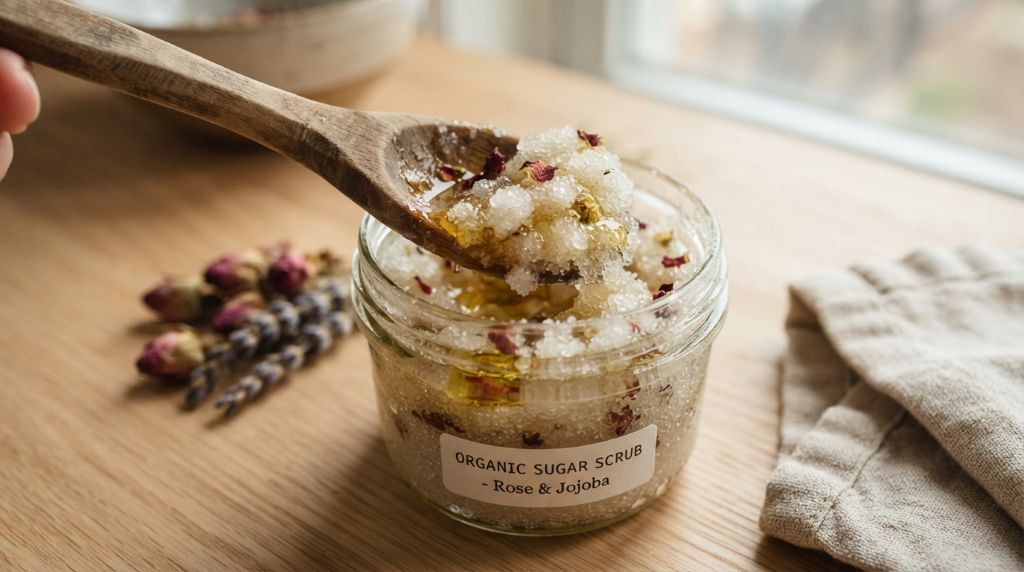
15 Sep How to Make Sugar Body Scrub Homemade for Sensitive Skin
Sensitive skin can turn even the simplest skincare routine into a challenge. I remember the first time I tried a store-bought body scrub. My skin turned red, felt tight, and itched for hours. That experience made me realize I needed a gentler approach. That is when I discovered homemade sugar scrubs. They are easy to make, customizable, and most importantly, kind to sensitive skin. Sugar is a natural humectant, which means it draws moisture to the skin while gently exfoliating. This makes it perfect for anyone with sensitive or dry skin. In this guide, I will show you how to make an Aromatherapy Home Spa sugar body scrub at home that will leave your skin soft, smooth, and irritation-free.
Why Sugar is the Best Exfoliant for Sensitive Skin
Sugar is one of the gentlest exfoliants you can use on sensitive skin. Unlike salt or other coarse exfoliants, sugar granules are small and dissolve easily in water. This means they provide effective exfoliation without causing micro-tears or irritation. According to dermatologists, sugar is an excellent choice for those with sensitive skin because it is less abrasive than other physical exfoliants. Additionally, sugar contains glycolic acid, a type of alpha hydroxy acid that helps promote cell turnover and reveal brighter, smoother skin.
I used to think that all exfoliants were created equal. However, after a particularly bad experience with a salt scrub, I decided to give sugar a try. The difference was immediate. My skin felt smooth and hydrated, not raw or irritated. Sugar also has the added benefit of being a natural humectant. This means it helps draw moisture into the skin, preventing the dryness that can sometimes follow exfoliation. Therefore, sugar is not just gentle. It also helps keep your skin hydrated and healthy.
Moreover, sugar is versatile. You can use it on its own or combine it with other soothing ingredients to create a scrub tailored to your skin’s needs. Whether you have dry, oily, or combination skin, sugar can be customized to work for you. This makes it an ideal choice for anyone looking to exfoliate without the fear of irritation.
Essential Ingredients for a Sensitive Skin Sugar Scrub
The beauty of making your own sugar scrub is that you can control exactly what goes into it. This is especially important for sensitive skin, as you can avoid harsh chemicals and irritants. The most basic sugar scrub requires just two ingredients: sugar and a carrier oil. However, you can enhance your scrub by adding soothing and moisturizing ingredients.
Sugar is the star of the show. You can use white sugar, brown sugar, or even raw sugar, depending on your preference. Brown sugar is often preferred for sensitive skin because it contains molasses, which adds extra moisture and nutrients. For the carrier oil, coconut oil is a popular choice because it is deeply hydrating and has antibacterial properties. However, if you have oily skin, you might prefer a lighter oil like jojoba or sweet almond oil. These oils are easily absorbed and will not leave your skin feeling greasy.
To make your scrub even more soothing, consider adding ingredients like aloe vera, honey, or oatmeal. Aloe vera is known for its calming and hydrating properties, making it perfect for sensitive or irritated skin. Honey is a natural humectant and has antibacterial properties, which can help prevent breakouts. Oatmeal is another excellent addition, as it is known for its anti-inflammatory properties. According to a study published in the Journal of Drugs in Dermatology, colloidal oatmeal can help soothe irritated skin and restore its natural barrier. I often add a spoonful of honey or aloe vera to my sugar scrubs for an extra boost of hydration and soothing power.
Step-by-Step Guide to Making Your Sugar Scrub
Making a sugar scrub at home is incredibly simple. You only need a few ingredients and a few minutes of your time. To start, gather your ingredients. You will need one cup of sugar, half a cup of your chosen carrier oil, and any additional soothing ingredients you want to include. I recommend starting with a basic recipe and then customizing it to suit your skin’s needs.
First, choose your sugar. White sugar will give you a finer scrub, while brown sugar will provide a slightly coarser texture along with extra moisture. Next, pick your carrier oil. Coconut oil is a great choice for dry skin, while jojoba or sweet almond oil works well for oily or combination skin. If you want to add extra soothing ingredients, measure out a tablespoon or two of aloe vera gel, honey, or colloidal oatmeal.
Now, it is time to mix everything together. In a bowl, combine the sugar and carrier oil. Stir well until the mixture resembles wet sand. If you are adding any extra ingredients like honey or aloe vera, mix them in at this stage. Once everything is well combined, transfer your scrub to an airtight container. I like to use a small glass jar, as it keeps the scrub fresh and makes it easy to scoop out what I need. Store your scrub in a cool, dry place. If you have added fresh ingredients like aloe vera, it is best to store the scrub in the refrigerator and use it within a week.
Tips for Using Your Sugar Scrub Safely and Effectively
Using a sugar scrub is simple, but there are a few tips to keep in mind to ensure you get the best results without irritating your skin. First, always do a patch test before using a new scrub. Apply a small amount to a discrete area of your skin, such as your inner arm, and wait 24 hours to see if there is any reaction. This is especially important if you have sensitive skin or are trying a new ingredient.
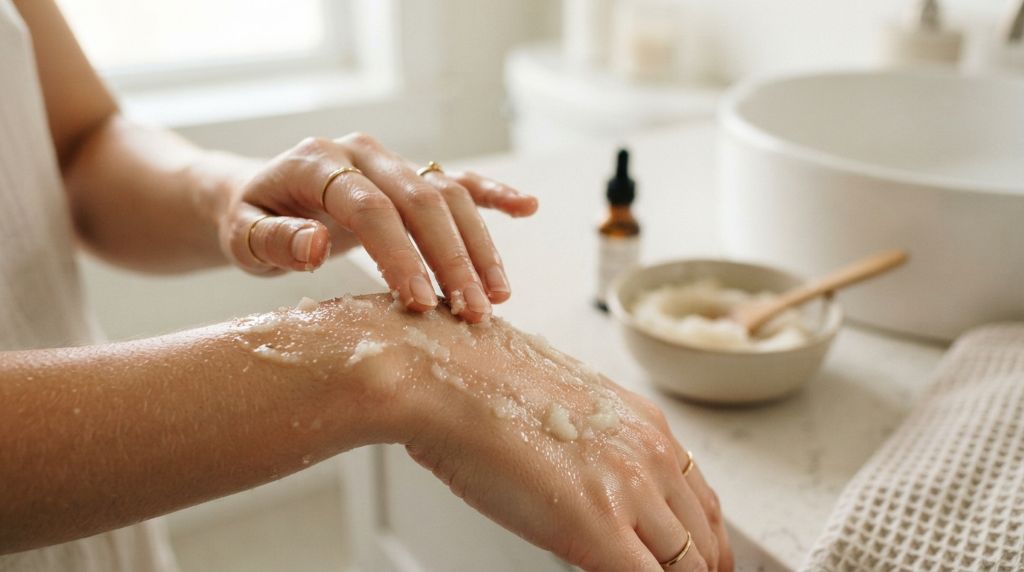
When you are ready to use your scrub, start with clean, damp skin. Take a small amount of the scrub and gently massage it onto your skin in circular motions. Be sure to avoid any areas with broken skin, cuts, or open wounds, as this can cause irritation. Focus on areas that tend to be rough or dry, such as your elbows, knees, and feet. However, do not overdo it. Exfoliating too harshly or too often can damage your skin’s moisture barrier and lead to irritation. For sensitive skin, limit exfoliation to one or two times per week.
After exfoliating, rinse your skin thoroughly with lukewarm water. Pat your skin dry with a soft towel and follow up with a moisturizer to lock in hydration. I always make sure to moisturize after using a scrub, as it helps keep my skin soft and prevents dryness. Additionally, avoid using your scrub on your face unless it is specifically formulated for facial use. The skin on your face is more delicate than the skin on your body, so it requires gentler treatment.
Frequently Asked Questions
How often should I use a sugar scrub on sensitive skin?
For sensitive skin, it is best to use a sugar scrub one to two times per week. Over-exfoliation can lead to irritation and damage to the skin’s moisture barrier.
Can I use a sugar scrub on my face?
It is generally not recommended to use a body sugar scrub on your face. The skin on your face is more delicate and may require a gentler exfoliant. If you want to use a sugar scrub on your face, opt for a finer sugar and a lighter oil, and always do a patch test first.
How long does a homemade sugar scrub last?
A homemade sugar scrub can last for several weeks if stored properly in an airtight container. However, if you add fresh ingredients like aloe vera, it is best to store the scrub in the refrigerator and use it within a week.
What is the best carrier oil for sensitive skin?
Coconut oil and sweet almond oil are both excellent choices for sensitive skin. Coconut oil is deeply hydrating, while sweet almond oil is lightweight and easily absorbed. Jojoba oil is another great option, as it closely resembles the skin’s natural oils.
Can I add essential oils to my sugar scrub?
Yes, you can add essential oils to your sugar scrub, but use them cautiously. Essential oils are highly concentrated and should always be diluted. Perform a patch test before applying to ensure your skin does not react negatively. Stick to gentle essential oils like lavender or chamomile for sensitive skin.
Conclusion
Making a sugar body scrub at home for sensitive skin is simple, effective, and rewarding. By choosing the right ingredients and following a few easy steps, you can create a scrub that gently exfoliates while nourishing your skin. I have found that homemade sugar scrubs are not only better for my sensitive skin but also more enjoyable to use. For a well-rounded skincare routine, you may also want to explore how to find the best serum for sensitive skin to learn how to choose products that complement your skin’s needs. There is something special about knowing exactly what is in your skincare products.
Now that you have all the information you need, it is time to make your own sugar scrub. Start with a basic recipe and experiment with different ingredients to find what works best for your skin. Your skin will thank you for the extra care and attention. If you found this guide helpful, share it with friends or leave a comment with your favorite scrub recipe.

No Comments