
02 Aug How to Find the Best Serum for Sensitive Skin
Does your face turn red, sting, or feel tight after applying a new product? You are not imagining it, and you are certainly not alone. Sensitive skin reacts to ingredients most people take for granted, making the search for a reliable serum for sensitive skin feel like a minefield. You want the glow, hydration, or brightening effects serums promise, but you cannot afford the irritation. This guide cuts through the marketing hype to give you a practical, skin-safe roadmap. You will learn exactly which ingredients to embrace, which to avoid, and how to test products safely so you can finally enjoy the benefits of a serum without the burn.
What Exactly Defines a Serum for Sensitive Skin?
Understanding the Unique Needs of Reactive Skin
A serum for sensitive skin is designed with a minimal ingredient list that prioritizes barrier support over aggressive active results. Unlike standard serums that may use high concentrations of acids or retinol, these formulations avoid common irritants like fragrance, alcohol, and essential oils. The goal is to deliver hydration and targeted benefits without triggering inflammation or redness.
Key Characteristics of a Safe Formula
Look for serums labeled “fragrance-free” (not just “unscented”), “hypoallergenic,” and “non-comedogenic.” The most reliable options contain soothing ingredients such as niacinamide, centella asiatica, and beta-glucan. A truly skin-safe serum will feel comforting upon application, not tingly or hot. If you feel a burn, your barrier needs something gentler.
Why Is Sensitive Skin So Prone to Reacting to Serums?
The Role of a Compromised Skin Barrier
Your skin barrier is a protective shield made of lipids and skin cells. When it is damaged due to over-exfoliation, weather changes, or harsh products, irritants penetrate more easily. This triggers nerve endings and immune cells, causing stinging, redness, and breakouts. A good serum for sensitive skin must first repair this barrier before delivering any other benefits.
Why High-Concentration Actives Can Backfire
Ingredients like pure vitamin C (L-ascorbic acid) or retinoids are powerful but often too strong for reactive skin. They lower the skin’s pH significantly, which can cause immediate stinging. Sensitive skin thrives on derivatives like ethyl ascorbic acid (for vitamin C), or granactive retinoid (for anti-aging), which are much milder while still effective.
Which Key Ingredients Should You Look For?
Barrier-Repairing Heroes
- Niacinamide (Vitamin B3): Reduces redness, strengthens the barrier, and regulates oil production.
- Ceramides: Fill the gaps between skin cells to prevent moisture loss.
- Panthenol (Pro-Vitamin B5): Deeply hydrates and soothes irritation.
Hydrating and Soothing Powerhouses
- Centella Asiatica (Cica): Calms inflammation and promotes healing.
- Beta-Glucan: A mushroom-derived hydration booster that mimics the skin’s natural moisturizing factors.
- Glycerin: A gentle humectant that draws water into the skin without irritation.
Gentle Brightening and Anti-Aging Options
If you want radiance, look for alpha-arbutin or tranexamic acid instead of strong L-ascorbic acid. For collagen support, peptides are exceptionally well-tolerated and highly effective for sensitive types.
Which Ingredients Must You Avoid Completely?
The Top Irritants That Wreck Sensitive Skin
| Ingredient | Why It Is a Problem |
|---|---|
| Fragrance (Parfum) | Causes contact dermatitis and allergic reactions in up to 30% of people. |
| Denatured Alcohol | Strips the acid mantle, causing tightness and increased reactivity. |
| Essential Oils (Lavender, Tea Tree) | Highly volatile and sensitizing over time. |
| High-Concentration AHAs/BHAs | Over-exfoliate the barrier, leading to red, flaky skin. |
Hidden Triggers in “Natural” Products
Do not assume natural equals safe. Many botanical extracts like witch hazel, citrus extracts, and mint can be drying or irritating. Always check the full ingredient list, even for products marketed as “clean” or “green.”
How Should You Test a New Serum Safely?
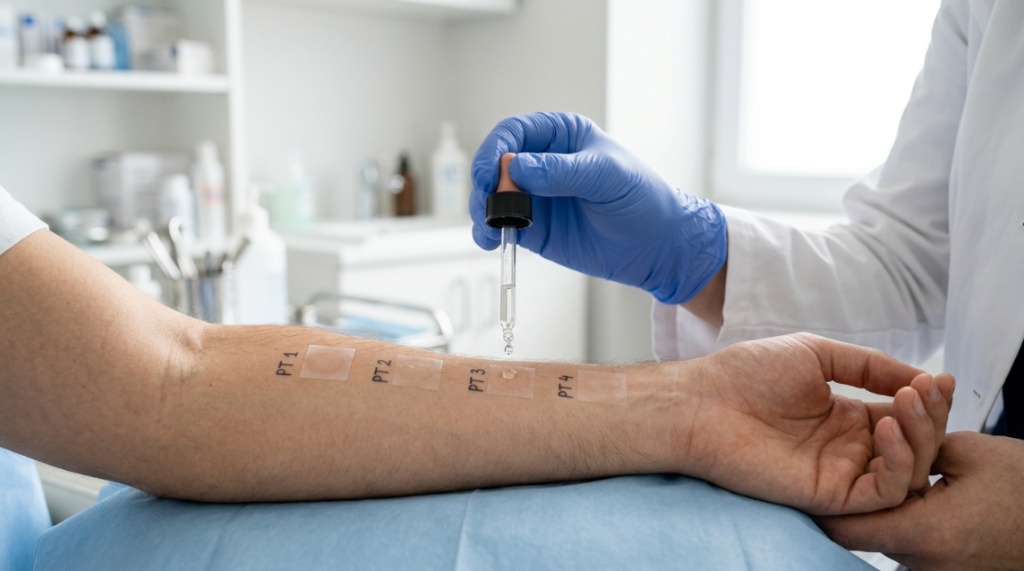
The 14-Day Patch Test Protocol
- Apply a small amount behind your ear or on your inner forearm for three days.
- If no reaction occurs, start using it on a small area of your jawline for five days.
- If still clear, apply it to your full face once every other day for one week.
How to Layer Serums Without Overwhelming Your Skin
Less is more. Use only one active serum at a time. Apply it to damp skin, then seal it with a simple moisturizer. Never mix a new serum for sensitive skin with other strong actives like retinol or vitamin C until you know your skin tolerates it perfectly.
What Is the Ideal Routine for a Serum for Sensitive Skin?
Morning Routine for Calm Hydration
- Cleanse with lukewarm water or a mild cream cleanser.
- Apply a hydrating serum for sensitive skin (look for niacinamide or beta-glucan).
- Seal with a fragrance-free moisturizer containing ceramides.
- Finish with a mineral SPF 30+ (zinc oxide or titanium dioxide).
Evening Routine for Repair and Recovery
- Double cleanse with an oil-based balm followed by a gentle water cleanser.
- Apply a barrier-repair serum (look for peptides or centella asiatica).
- Top with a thicker night cream that contains squalane or shea butter.
Can You Use Vitamin C With Sensitive Skin?
How to Choose a Gentle Vitamin C Serum
Yes, but you must select the right form. Avoid L-ascorbic acid if your skin is easily irritated. Instead, look for ethyl ascorbic acid or ascorbyl glucoside, which are stable and much gentler. A well-formulated serum for sensitive skin should contain a low concentration (around 5-10%) and include soothing partners like vitamin E or ferulic acid to reduce potential sting.
How to Introduce Vitamin C Into Your Routine
Start with one application every third morning. If your skin tolerates it well, increase to every other morning. Always buffer it by applying your moisturizer first, then the vitamin C serum on top. This technique slows absorption and dramatically reduces irritation risk.
How Do You Know If a Serum Is Actually Working?
Signs of a Good Reaction (Success Markers)
- Your skin feels comfortable, not tight or hot, after application.
- Fine lines appear softer due to improved hydration.
- Redness gradually fades over two to four weeks.
- Your skin texture looks smoother and more even.
Red Flags to Stop Immediately
If you experience persistent stinging, bumps that look like tiny pimples, or a feeling of “burning” warmth, wash the product off immediately. These are signs of a compromised barrier or an ingredient that does not agree with your chemistry.
What Is the Difference Between “Hypoallergenic” and “Sensitive Skin” Serums?
Why Hypoallergenic Is Not a Guarantee
The term “hypoallergenic” is not regulated by the FDA. It simply means a brand claims the product is less likely to cause allergies. However, it can still contain botanical extracts or preservatives that trigger reactions in some people. A serum for sensitive skin from a reputable brand will often have a shorter, transparent ingredient list available for review.
How to Verify Brand Claims
Read the ingredient list yourself. Look for products that have been tested by dermatologists or have published clinical safety data. Avoid any product that lists “fragrance” as an ingredient, even if it is hypoallergenic on the label.
Which Budget-Friendly Serums Hold Up for Sensitive Skin?
What to Look for in an Affordable Formula
Price does not always equal quality or safety. Many affordable drugstore serums are free of fragrance and essential oils. Look for brands that focus on transparent labeling and deliver proven soothing ingredients like panthenol or niacinamide.
How to Save Without Sacrificing Safety
Buy unscented, basic hydration serums with short ingredient lists. A glycerin and panthenol-based serum can cost less than $15 and work perfectly. Avoid anything that relies on expensive marketing claims or fancy packaging.
Frequently Asked Questions
Can I use a serum for sensitive skin every day?
Yes, most gentle hydrating serums are safe for daily use. Start with once a day in the morning or evening, and increase to twice daily only if your skin does not show any signs of irritation after two weeks.
Is hyaluronic acid safe for sensitive skin?
Yes, hyaluronic acid is generally very well tolerated because it is naturally present in the body. However, ensure the formula does not contain alcohol or fragrance, which can cancel out the benefits and cause stinging.
Can a serum for sensitive skin help with acne?
Yes, niacinamide-based serums are excellent for calming inflammation and regulating oil without causing irritation. Avoid salicylic acid or benzoyl peroxide serums unless your dermatologist recommends a low-concentration version.
How long does it take to see results from a sensitive skin serum?
Hydration improvements can be noticed within a few days. Barrier repair and redness reduction typically take two to four weeks of consistent use. Anti-aging or brightening effects may require eight to twelve weeks.
Should I stop using all actives if my skin is reacting?
Yes, stop everything except a gentle cleanser and a barrier-repair moisturizer for at least one week. Once your skin calms down, reintroduce one product at a time to identify the trigger.
Is it safe to layer multiple serums for sensitive skin?
Layering two or three serums is possible if each one is gentle and fragrance-free. Stick to a minimalist approach: hydrating serum, then a barrier serum. Do not mix multiple active ingredients like acids or retinoids.
Can I use a retinol serum if I have sensitive skin?
Yes, but you need a minimal concentration and a slow-release formulation. Look for “granactive retinoid” or “retinal” serums designed for sensitive skin. Start with one application per week and buffer it with moisturizer.

No Comments