
29 Jun How to Choose Wedding Pearl Earrings That Match Your Bridal Style
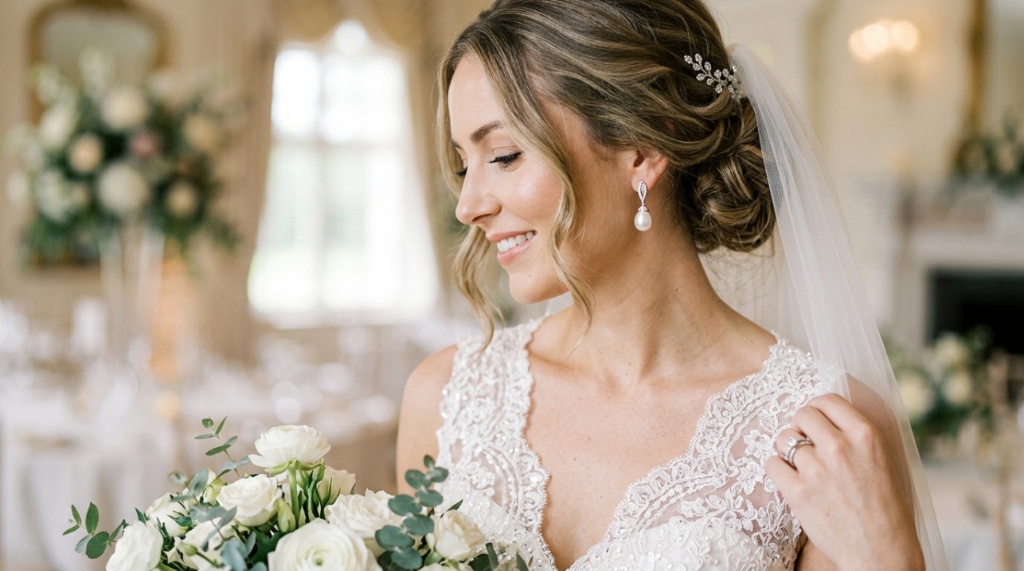
Pearl earrings are the most versatile and elegant bridal accessory because they complement virtually every skin tone, wedding dress style, and ceremony theme without competing for attention. Unlike diamonds that sparkle from across the room, pearls offer a soft, luminous glow that draws the eye to your face naturally.
The Unique Appeal of Pearl Luster on Your Wedding Day
Pearls possess a phenomenon called “luster” — the soft, mirror-like quality that reflects light gently. In wedding photography, pearl earrings create a flattering diffusion of light around your face, preventing harsh shadows while adding a romantic, ethereal quality. This makes them particularly effective for outdoor or garden ceremonies where natural light changes constantly.
Why Pearls Work with Every Wedding Theme
From rustic barn weddings to black-tie cathedral ceremonies, pearls adapt. Their neutrality means they never clash with lace, satin, tulle, or beaded fabrics. A simple pearl stud speaks to minimalist elegance, while a cascading pearl drop adds drama for formal affairs. This flexibility eliminates the stress of matching metals or worrying about gemstone colors clashing with your bouquet.
Pearls and the Modern Bride
Today’s brides are embracing pearls as a rebellion against the “more is more” trend. Instead of oversized diamond hoops or massive chandeliers, modern brides choose pearl earrings that whisper sophistication. The result: a look that photographs beautifully for decades, not just the current Instagram aesthetic.
How Do You Match Pearl Earrings to Your Dress Neckline?
Your dress neckline dictates the size, length, and style of your pearl earrings. The general rule: the more fabric covering your neck and shoulders, the larger and more dramatic your earrings should be. Conversely, bare necklines call for smaller, more delicate pieces that don’t compete with your collarbone.
Pearl Earrings for Sweetheart and Off-Shoulder Necklines
Sweetheart necklines expose your decolletage and shoulders, creating a broad canvas. Choose pearl stud earrings approximately 8-10mm in size or small pearl drops that hover just below your earlobe. This keeps the focus on your neckline while adding a graceful accent. Avoid oversized drops that visually shorten your neck.
Choosing Pearls for High Neck and Collared Dresses
High necklines like boatneck, mock turtleneck, or collared lace styles need longer earrings. A pearl drop earring measuring 2-3 inches creates vertical lines that elongate your silhouette. Look for designs where pearls graduate in size from smaller to larger, creating movement that draws the eye upward.
Pearl Options for V-Neck and Plunging Necklines
V-necks echo the natural lines of your body. Mirror this geometry with pearl teardrops or pear-shaped pearls that follow the same angle. Avoid round studs here, as they create an awkward horizontal interruption. Instead, choose elongated drops that align with the V-shape of your dress for a harmonious, lengthening effect.
Which Pearl Color Should You Choose for Your Skin Tone?
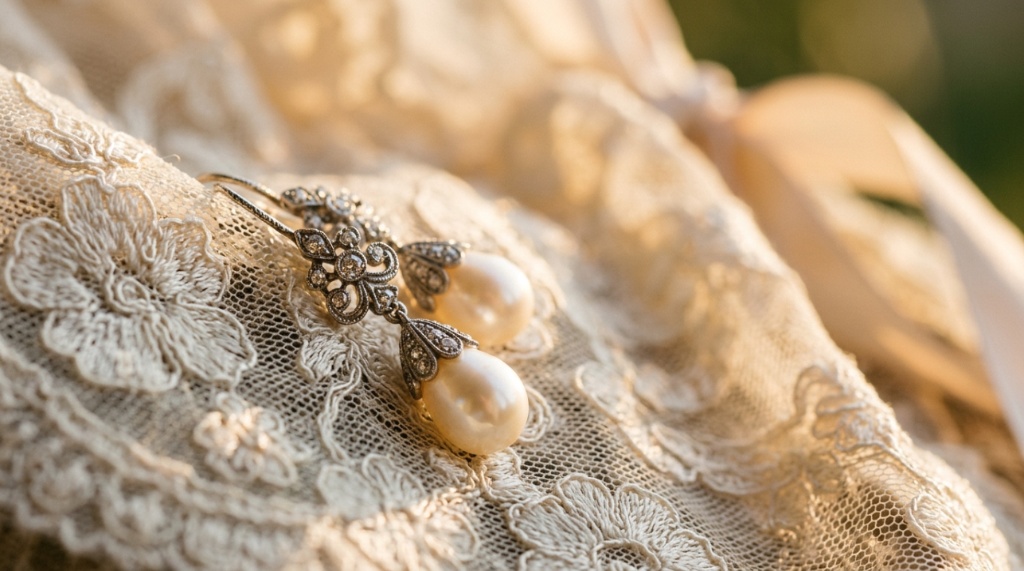
Pearl color is not about the pearl itself, but how it interacts with your skin’s undertones. Cool skin tones — those with pink or blue undertones — look best in white, silver-white, or rose-tinted pearls. Warm skin tones with yellow or golden undertones shine with cream, champagne, or golden pearls.
Determining Your Skin’s Undertone at Home
Look at the veins on your wrist in natural light. Blue or purple veins indicate cool undertones. Greenish veins suggest warm undertones. If you see both, you have neutral undertones and can wear any pearl color. Hold a pure white paper next to your face — if your skin appears rosy beside it, you’re cool. If yellowish, you’re warm.
White Pearls for Cool and Fair Skin Tones
White Akoya pearls with pink or silver overtones create a crisp, fresh look against fair or cool-toned skin. These pearls act like a highlighter, brightening your complexion without washing you out. Avoid cream pearls, which can make fair skin look sallow or tired in photographs.
Champagne and Golden Pearls for Warm Skin Tones
Warm undertones glow when paired with champagne, golden, or even Tahitian pearls with bronze undertones. These shades mimic the natural warmth in your skin, creating a seamless, sunkissed appearance. White pearls can sometimes look stark against warm skin, so experiment with cream variations first.
What Size of Pearl Earrings Flatters Your Face Shape?
Your face shape determines whether a pearl earring accentuates your best features or accidentally emphasizes areas you’d rather downplay. The goal is balance: choose earrings that create visual width where your face is narrow, and length where your face is wide.
Pearl Earrings for Round Faces
Round faces benefit from elongated drops that add vertical dimension. Choose pearl drop earrings that hang 1.5-2 inches below your earlobe. Avoid round pearl studs larger than 8mm, as they mirror your face’s curves and make it appear even fuller. Teardrop shapes work beautifully here.
Choosing Pearls for Oval and Heart-Shaped Faces
Oval faces can wear virtually any pearl style, but heart-shaped faces with wider foreheads and narrower chins need careful balance. Choose pearl studs around 10mm or small drops that add width at the jawline. Avoid long dangles that emphasize a pointed chin — instead, select rounded shapes that soften your lower face.
Pearl Options for Square and Long Faces
Square faces with strong jawlines benefit from round pearl studs or short drops that soften angular features. Long faces need width rather than length, so choose wider pearl designs like clusters or button-shaped pearls. Avoid long, skinny drops that make your face appear even longer.
How Do Pearl Grades Affect Your Wedding Earrings?
Pearl grading directly impacts appearance, durability, and budget. Understanding the four main quality factors — luster, surface, shape, and nacre thickness — helps you choose earrings that will last through decades of anniversary celebrations, not just your wedding day.
Understanding Luster and Surface Quality
Luster is the single most important quality factor. High-luster pearls show distinct, sharp reflections on their surface — you should be able to see your own outline. Surface quality refers to blemishes. No pearl is perfectly blemish-free, but AAA-grade pearls have very minor marks visible only under close inspection. For wedding earrings, prioritize luster over perfect surfaces, as luster photographs better.
Nacre Thickness and Longevity
Nacre is the pearl’s coating — thicker nacre means longer life. Pearls with thin nacre may peel or lose their luster within a few years. For heirloom-quality earrings, ask for pearls with nacre thickness of at least 0.5mm for Akoya pearls and 1mm for freshwater pearls. This ensures your earrings remain beautiful for annual anniversary wear.
Shape Perfection vs. Character
Perfectly round pearls command higher prices, but slightly baroque (irregular) pearls offer unique character at lower costs. For wedding earrings, consider your style: traditional brides may prefer classic round pearls, while bohemian brides might love organic, irregular shapes that feel more natural and artistic.
Which Pearl Type Is Best for Wedding Earrings?
Four main pearl types dominate the bridal market, each with distinct characteristics affecting appearance, price, and care. Your choice depends on budget, style, and how often you plan to wear the earrings after your wedding.
Akoya Pearls: The Classic Bridal Choice
Akoya pearls are the traditional Japanese pearl, known for their mirror-like luster and perfectly round shapes. They range from 2-10mm, with 7-8mm being ideal for bridal studs. Pros include exceptional luster and classic appearance. Cons include higher price and smaller maximum sizes. These are perfect for formal, traditional weddings.
Freshwater Pearls: Budget-Friendly and Versatile
Freshwater pearls offer excellent value, often costing 60-70% less than Akoya pearls. Modern freshwater pearls come in abundant shapes, sizes, and colors. Pros include affordability, size variety up to 15mm, and durability. Cons include slightly lower luster than Akoya. These work well for casual, rustic, or budget-conscious weddings.
South Sea and Tahitian Pearls: Luxury Statement Options
South Sea pearls (white and golden) and Tahitian pearls (black with green, blue, or purple overtones) are the largest and most luxurious options. Sizes range from 9-20mm. Pros include dramatic size, unique colors, and extreme luster. Cons include very high prices and bold appearance that may overwhelm delicate dresses. Best for evening or black-tie weddings only.
Can You Wear Pearl Earrings with Other Bridal Jewelry?
Absolutely, but the key is coordination rather than matching. Pearls pair beautifully with diamonds, cubic zirconia, and even colored gemstones when you follow a few simple principles about metal tones, visual weight, and spacing.
If you are opting for relaxed elegance over traditional ballroom glamour, look for baroque pearls. Their organic, irregular shapes perfectly complement organic textures. For instance, pairing textured pearl drops with Wedding Dresses for a Rustic Chic Look strikes the ultimate balance between effortless charm and bridal sophistication.
Mixing Pearls with Diamond or Crystal Accents
Pearls with diamond accents create a timeless combination where the diamond’s sparkle complements the pearl’s soft luster. Choose designs where diamonds are smaller than the pearls — diamonds should accent, not compete. A pearl stud with a diamond halo works perfectly, as does a pearl drop with a single diamond at the top.
Coordinating Pearl Earrings with Your Engagement Ring
Your engagement ring should be the hero piece. Pearl earrings should complement without competing. If your ring has yellow gold, choose pearl earrings in gold settings. If your ring is platinum or white gold, opt for silver or white gold settings. This creates a visual flow that feels intentional rather than accidental.
Layering Pearl Earrings with Necklaces and Bracelets
When wearing a pearl necklace, your earrings should be smaller — studs rather than drops. This prevents a “pegboard” look where pearls appear everywhere. If wearing no necklace, longer drop earrings create beautiful negative space around your neckline. Always leave at least 2-3 inches between your earring and any necklace or collar.
How Should You Care for Wedding Pearl Earrings?
Pearls are surprisingly delicate and require specific care to maintain their luster. Unlike diamonds that resist scratches and chemicals, pearls are organic gems that can be damaged by perfumes, hairsprays, and even natural body oils.
Daily Wear Rules for Pearl Earrings
Always put on your pearl earrings as the very last step of your getting-ready routine, after hairspray, perfume, and makeup have fully dried. Chemicals in these products can cloud pearl surfaces permanently. On your wedding day, designate a bridesmaid to handle your earrings and only insert them moments before you walk down the aisle.
Cleaning and Storage Best Practices
Wipe your pearl earrings with a soft, dry cloth after each wear to remove oils. Never use ultrasonic cleaners, steam, or harsh jewelry cleaners — these damage pearls irreparably. Store pearls flat in a soft pouch or lined jewelry box, separated from other jewelry. Harder gems like diamonds can scratch pearl surfaces if stored together.
When to Restring Pearl Drops and Dangles
Pearl drop earrings strung on silk thread should be restrung every 1-2 years if worn frequently. Look for signs like thread discoloration, pearls shifting excessively, or visible gaps between pearls. For your wedding earrings, inspect the thread at least one month before the ceremony to allow time for professional restringing if needed.
Where Can You Buy Authentic Wedding Pearl Earrings Online?
Authenticity and quality vary dramatically between retailers. The key is finding a trusted source that provides transparent grading, realistic pricing, and clear return policies. This is especially important when shopping for bridal jewelry you cannot see in person before your wedding day.
What to Look for in an Online Pearl Retailer
Reputable retailers provide detailed information about pearl type, size, luster grade, and surface quality. Look for high-resolution photos showing the pearl from multiple angles, not just stock images. Customer reviews should mention specific pearl characteristics, not just vague praise. A solid return policy (30 days minimum) gives you confidence in your purchase.
If you are looking for expertly curated options available in New York, you can explore premier selections of wedding pearl earrings bridal pearl earrings that combine classic elegance with modern design sensibilities. Many top retailers offer virtual consultations to help you see how pearls move and reflect light before committing.
Comparing Prices to Ensure Fair Value
Compare prices across multiple retailers for similar pearl specifications. A 7mm AAA Akoya pearl stud should cost within a predictable range. If a deal seems too good to be true, it likely uses low-grade pearls, imitation pearls, or misleading grading. Remember that well-cared-for pearl earrings last a lifetime — consider them an investment rather than an expense.
Frequently Asked Questions
Are pearl earrings appropriate for all wedding themes?
Yes, but the specific style matters. Classic round pearl studs suit formal and traditional weddings, while baroque or irregular pearls complement bohemian and rustic themes. For modern or minimalist weddings, choose small pearl studs in sleek metal settings.
Can I wear pearl earrings if my dress has pearls on it?
Absolutely, but avoid competing patterns. If your dress has clustered pearl embellishments, choose simple single-pearl studs. If your dress has scattered pearl embroidery, select pearl drops that are larger than the dress pearls to create hierarchy and visual interest.
How much should I spend on wedding pearl earrings?
Budget varies widely. Quality freshwater pearl studs start around $50-$100. Good Akoya pearl studs range from $150-$500. Luxury South Sea or Tahitian pearls easily exceed $1,000. Allocate about 5-10% of your total accessory budget for earrings — they are visible in every photo.
Are imitation pearls acceptable for wedding earrings?
Imitation pearls lack the luster, weight, and durability of real pearls. They may appear plastic in photographs and can chip or peel over time. If budget is tight, choose lower-grade real freshwater pearls over high-end imitations — real pearls age gracefully, while imitation ones do not.
Should my bridesmaids also wear pearl earrings?
Coordinating bridesmaids in pearl earrings creates cohesive wedding photos, but avoid requiring identical styles. Allow each bridesmaid to choose pearl earrings that suit her face shape and personal style. A color guideline — all white pearls, for example — maintains unity without feel uniform.
Can pearl earrings be worn after the wedding?
This is one of their greatest advantages. Pearl earrings transition beautifully to anniversary dinners, date nights, professional events, and daily wear. Choose a classic style that suits your lifestyle beyond the wedding day for the best long-term value.
How do I know if my pearls are real?
Real pearls feel slightly gritty when gently rubbed against your teeth — they have a sandy texture. Fake pearls feel smooth. Real pearls also have minor surface irregularities visible under magnification, while fake pearls appear perfectly smooth and plastic-like.

No Comments